
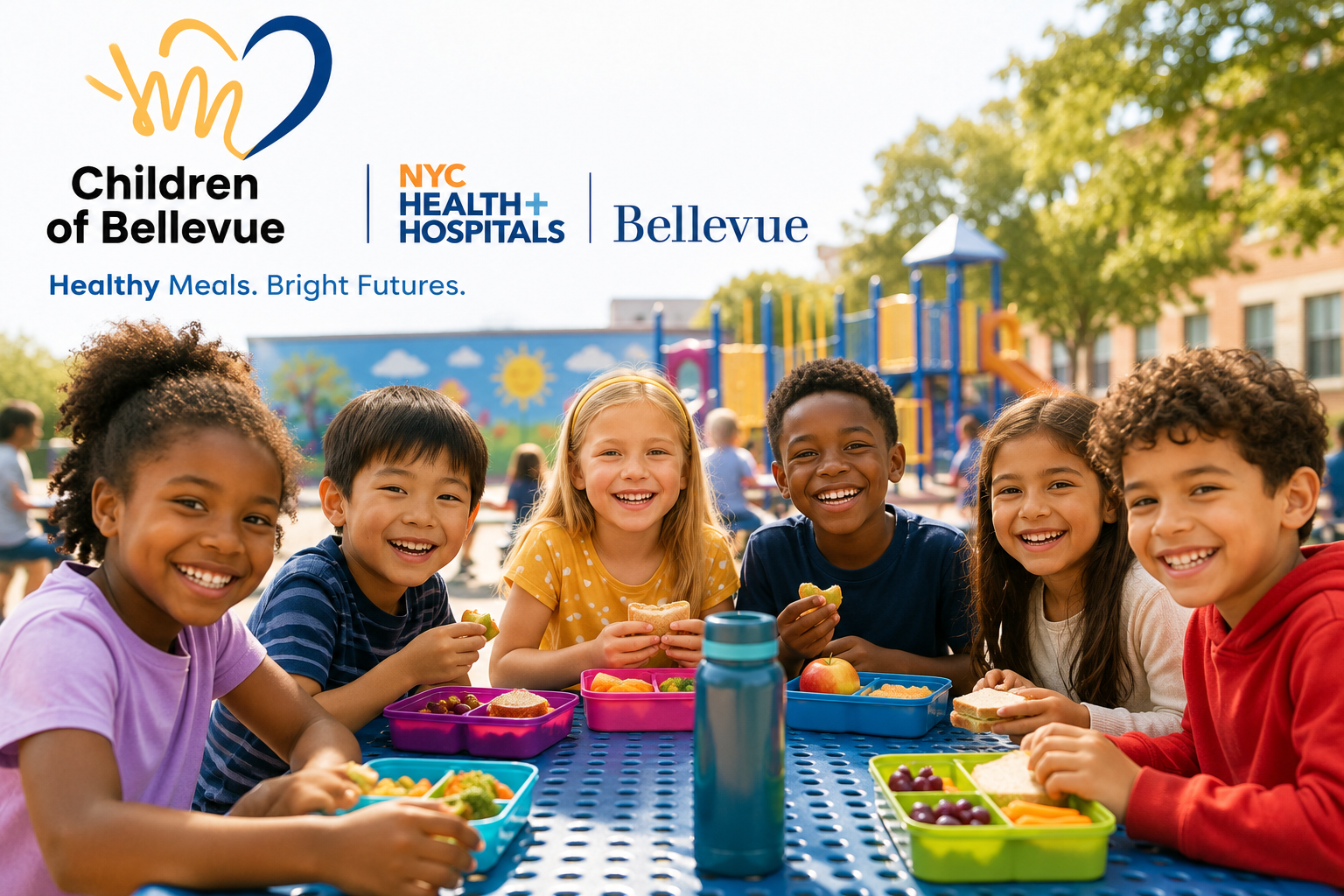
Summer Hunger Awareness Month: Why Food Security Matters for Children's Health and Well-Being
June is recognized nationally as Summer Hunger Awareness Month, a time to shine a light on a challenge affecting millions of children across the United States, including thousands of children and families in New York City.
At Children of Bellevue, we understand that access to nutritious food is not simply a matter of hunger—it is a critical Social Determinant of Health (SDOH) that directly impacts a child's physical health, emotional well-being, educational success, and long-term life outcomes.
When schools close for summer break, many children lose reliable access to the free breakfasts and lunches they receive during the school year. For families already struggling with rising housing costs, transportation expenses, healthcare needs, and childcare costs, summer can become a season of heightened food insecurity.
Food Insecurity Is More Than Hunger
Social Determinants of Health are the conditions in which people are born, grow, live, learn, work, and play. These factors significantly influence health outcomes throughout life.
Food insecurity is deeply interconnected with other Social Determinants of Health, including:
- Economic Stability
- Housing Security
- Access to Healthcare
- Education Access and Quality
- Neighborhood and Built Environment
- Social and Community Context
When a family struggles to afford nutritious food, children are more likely to experience:
- Poor physical health and chronic illness
- Developmental delays
- Difficulty concentrating in school
- Increased behavioral and emotional challenges
- Higher rates of anxiety and depression
- Poor academic outcomes
Research consistently shows that children experiencing food insecurity are at greater risk of adverse health outcomes that can persist into adulthood.
The Connection Between Food Insecurity and Adverse Childhood Experiences (ACEs)
Food insecurity is also closely linked to Adverse Childhood Experiences (ACEs)—potentially traumatic events that occur during childhood and can have lasting effects on health, learning, and behavior.
Examples of ACEs include:
- Household economic hardship
- Domestic violence
- Parental mental illness
- Substance misuse in the household
- Neglect
- Housing instability
- Community violence
For many children, food insecurity does not occur in isolation. It often exists alongside other stressors that create toxic stress and increase the likelihood of multiple ACEs.
A child who worries about where their next meal will come from may also be experiencing housing instability, parental unemployment, or limited access to healthcare. These overlapping challenges compound the effects of trauma and can negatively impact brain development, emotional regulation, and lifelong health.
At Children of Bellevue, we see firsthand how addressing basic needs such as nutrition can serve as a protective factor that helps buffer children from the harmful impacts of toxic stress and adversity.
Summer Should Be a Time for Growth—Not Hunger
Every child deserves a summer filled with opportunities to learn, play, and thrive—not worry about whether there will be food on the table.
Fortunately, New York City offers numerous resources to help families access nutritious meals during the summer months.
Free Summer Meals for Children and Teens
The New York City Public Schools Free Summer Meals Program provides free breakfast and lunch to anyone age 18 and younger. No registration, identification, or application is required. Meals are available at select public schools, parks, pools, libraries, and community locations throughout all five boroughs.
Families can locate the nearest meal site through:
- NYC Public Schools Summer Meals Program
- NYC 311
- USDA Summer Meals Site Finder
- Hunger Solutions New York Summer Meals Locator
Summer meals are available citywide from late June through early September.
Food Assistance Resources Across New York City's Five Boroughs
The following trusted organizations operate food pantries, community kitchens, and food distribution programs throughout New York City.
Citywide Resources
- Operates a network of nearly 800 food pantries, soup kitchens, and mobile food distributions citywide.
- Official NYC resource for locating free food pantries and soup kitchens.
- Interactive map showing free food distributions, community pantries, and mobile markets across all five boroughs.
Bronx
These organizations are among the Bronx-based food programs supported through City Harvest's emergency food network.
Brooklyn
- St. John's Bread & Life
- The Campaign Against Hunger
- Masbia
- Neighbors Together
- Reaching Out Community Services (ROCS)
These organizations provide groceries, prepared meals, and emergency food assistance to Brooklyn residents.
Manhattan
- New York Common Pantry
- Holy Apostles Soup Kitchen
- West Side Campaign Against Hunger
- Broadway Community
- Crossroads Community Services
Crossroads Community Services provides meals and pantry services to New Yorkers facing food insecurity.
Queens
These organizations support families with groceries, emergency food, and additional social services.
Staten Island
- Project Hospitality
- Jewish Community Center of Staten Island
- Salvation Army Stapleton Corps
- Our Lady of Good Counsel Food Pantry
These community organizations provide food assistance and support services for Staten Island families.
How You Can Help
Ending childhood hunger requires collective action. Community members can make a difference by:
- Donate to Children of Bellevue and designate your donation to “We Eat Together”
- Donating to local food banks and pantries
- Volunteering at food distribution events
- Advocating for nutrition assistance programs
- Supporting policies that address poverty and food insecurity
- Sharing food resources with families in need
At Children of Bellevue, we believe that every child deserves the opportunity to grow, learn, and thrive. Addressing food insecurity is not simply about providing meals—it is about creating healthier futures, reducing childhood adversity, and strengthening the well-being of our communities.
This Summer Hunger Awareness Month, let us work together to ensure that no child's potential is limited by hunger.